
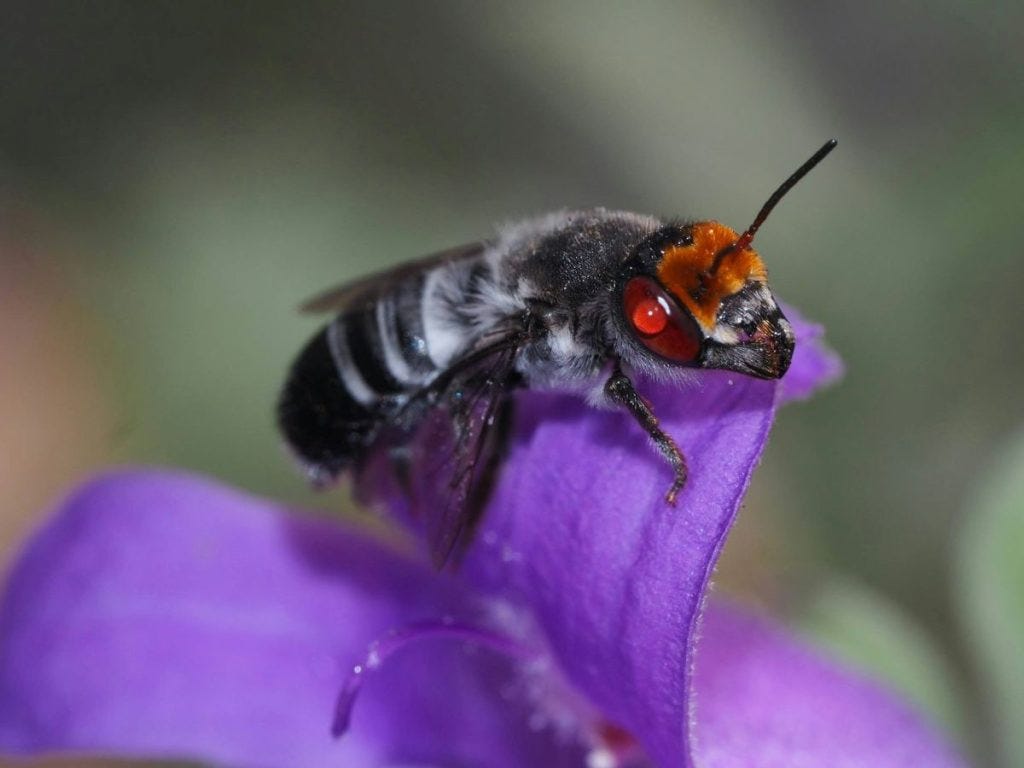
Australia’s native bees struggled after the Black Summer fires – but a world-first solution brought them buzzing back
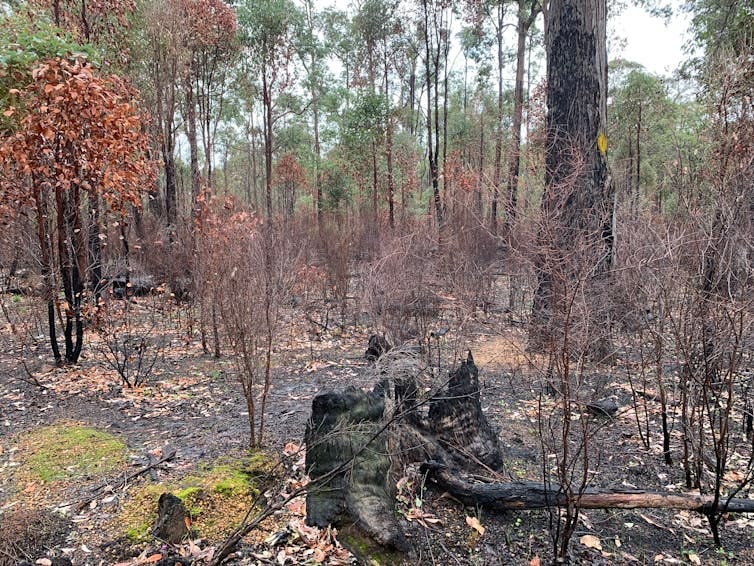
After a devastating bushfire, efforts to help nature recover typically focus on vertebrates and plants. Yet extreme fires can threaten insects, too.
After the Black Summer fires of 2019–20, I embarked on world-first research into whether “bee hotels” – a type of artificial nesting structure – could help native bees recolonise an area.
I installed 1,000 bee hotels in the Jarrah forests of Western Australia, parts of which burned during the Black Summer fires.
After months of monitoring, I concluded – with great excitement and relief – that the project was a success. Native bees were using the structures to lay eggs and raise young. The work shows pollinators such as bees can be aided after fires, to help bring damaged landscapes back to life.
Vital wild pollinators
Australia has more than 2,000 species of native bees. They help keep our ecosystems healthy, and play a crucial role in pollinating wildflowers.
Native bees typically nest in holes in trees that occur naturally when beetles bore through wood. When fire destroys trees, bees can be left without a place to nest and reproduce. This prevents them from recolonising habitats after fire.
Under climate change, bushfires in Australia are becoming more frequent and severe. Wood-nesting bees are especially vulnerable to bushfires. For example, fires are recognised as a major threat to the glittering green carpenter bee (Xylocopa aerata), which creates its own holes in wood to nest in.
The worsening fires take place at a time when global populations of wild pollinators, such as bees, are in steady decline. This problem has been well-publicised, although the plight of Australia’s native bees has received less attention.
My research tested whether bee hotels could help our native bees bounce back after fire.
What the research found
The Jarrah Forest of southwest Western Australia is a biodiversity hotspot. The 1,000 bee hotels were installed across five sites in the northern part of the forest, where bushfires burned during the summer of 2019–20.
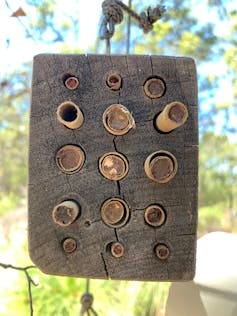
Bee hotels replicate the holes in wood that native bees nest in. In August 2021, I installed bee hotels of two types: wooden blocks with 15 holes drilled in them, and bunches of about 50 bamboo stems bundled together. I monitored them from September 2021 to March 2022.
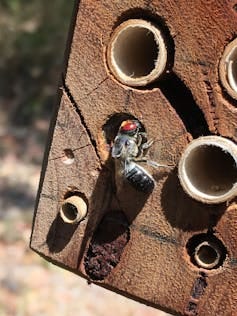
At the end of the period I concluded – with great excitement and relief – that the project was a success. Across all bee hotels at the five sites, 832 cavities were occupied by native bees.
Assuming four cells per cavity for each offspring, this meant more than 3,300 native bees would likely emerge in the next generation.
Uptake by bees was initially slow. This was to be expected, because the main group of species that used bee hotels – from the Megachile genus – tend to not be active in the region until late spring.
I found the nests were also used by bees of the genus Hylaeus, as well as tiny Exoneura bees. Other inhabitants included wasps, spiders, ants and crickets.
I also surveyed three burnt sites where bee hotels were not installed. There, I recorded the numbers of native bees foraging on flowers, and compared it to the sites with bee hotels. More native bees were present at the latter sites, which reinforced my findings.
Importantly, the research allowed natural recolonisation. It did not involve installing bee hotels at unburnt sites, then moving them to burnt areas once they were occupied. This could have been disastrous.
Aside from depleting one population, it may have meant native bees were moved to an area where there were not enough flowers, or were forced to compete with existing bee populations.
The research also showed European honey bees could pose a problem for native bees in fire-damaged landscapes. At sites with a higher density of honey bees, fewer native bees were foraging and fewer nests were occupied in the bee hotels.
This supports previous findings by myself and others that honey bees can negatively affect native bees. It adds further evidence that honey bees should not be permitted in sensitive habitats, such as bushland following fire or in national parks.
Empowering bee-saving efforts
My research provides proof that bee hotels can aid in the recovery of cavity-nesting native bees after fires.
This work fills a major gap. While there has been much attention on the recovery of furry animals and plants after fires, there has been far less investment into the recovery of plant pollinators.
Leaving insects to languish after fires isn’t just bad for those species. It also hampers the ability of ecosystems to recover from fire and other damage. This is especially true for pollinators such as native bees, which are vital for plant reproduction.
This work empowers us to help native bees after fires, by providing nesting resources to promote populations.
Kit Prendergast, Postdoctoral Researcher, Pollination Ecology, University of Southern Queensland
This article is republished from The Conversation under a Creative Commons license. Read the original article.
Share this article:
Share
More from around the region

bluemountainsplanetaryhealth Dec 6
@ bluemountainsplanetaryhealth . Dec 6
Open post by bluemountainsplanetaryhealth with ID 18087414430823459
We had a thoroughly enjoyable final Skill Share Saturday for the year yesterday with Qigong, Fashion Upcycling, Seed Saving and Bushcare!
We shared seeds from local gardens and harvested carrots, as well as Mizuna, Broad Bean, Daikon and Land Cress seeds from the Planetary Health garden. We then packaged up (and shared) our first Upper Mountains Seed Savers packs for our fledgling Seed Bank.
In Bushcare it`s very exciting to see whole new areas of the Planetary Health Precinct open up as we remove invasive weeds. It`s been a year of great progress as we`ve restored habitat for wildlife and given local native plants the opportunity to flourish and re-establish on the site.
#skillshare #skillsharesaturday #seedsaving #bushcare #planetaryhealth #community ...
17 0

bluemountainsplanetaryhealth Dec 3
@ bluemountainsplanetaryhealth . Dec 3
Open post by bluemountainsplanetaryhealth with ID 18089921119749361
Join the Planetary Health Centre this Sat 6 Dec for the last Skill Share Saturday of the year: Qigong at 9am, Seed Saving & Gardening Group at 10am, and Bushcare at 1.30pm. One perfect day with great company, great coffee and food, and great steps for living a healthy balanced life, while also contributing to the health of our planet for present and future generations. All ages welcome!
Registration links in profile and below.
Register for Qigong here: https://bit.ly/48wlHjD
Register for Seed Saving & Gardening here: https://bit.ly/4prcRe7
Register for Bushcare here: https://bit.ly/4oAFDrz
#qigong #bushcare #seedsaving #gardening #community #selfcare #planetarycare #healthcare #planetaryhealth #katoomba #bluemountains ...
10 0

bluemountainsplanetaryhealth Nov 27
@ bluemountainsplanetaryhealth . Nov 27
Open post by bluemountainsplanetaryhealth with ID 17933389716129642
We have a rare opportunity to learn about the newest and best possible ways to support family and community members struggling with mental health issues, at a free talk and afternoon tea provided by Upper Blue Mountains Sunrise Rotary at the Planetary Health Centre at 2pm this Saturday 29 Nov. Hear from Peter Joseph AM, Chair of the Black Dog Institute, and Professor Helen Christensen AO, Fellow of the Australian Academy of Science and former Executive Director and Chief Scientist at the Black Dog Institute. They`ll be in conversation with journalist Emma Rossi. Dr Christensen is a pioneer in using the internet to reach young people struggling with depression. Her digital mental health interventions are used by millions globally, delivering evidence-based therapy for depression, anxiety, and suicide prevention. Her research uses data from smartphones and wearables – like movement, screen use, and sleep – to detect early signs of mental health issues. Bookings essential here (link in profile): https://bit.ly/4oOnYxz
#mentalhealth #suicideprevention #blackdoginsstitute #planetaryhealth #katoomba #bluemountains
@lifelineaustralia @blackdoginst ...
8 1

bluemountainsplanetaryhealth Nov 26
@ bluemountainsplanetaryhealth . Nov 26
Open post by bluemountainsplanetaryhealth with ID 18040613594701839
This Saturday Sherlie McMillan from Rotarians 4 Planetary Health will be running a workshop on How to use a sewing machine from 9am at the Planetary Health Centre in Katoomba. Learn how to set up a machine, service it, troubleshoot when it`s not sewing correctly, and learn some basic sewing skills.
Bookings essential here (link in profile):
https://events.humanitix.com/how-to-use-your-sewing-machine
NB. This class is a prerequisite for our very popular Fashion Upcycling classes held once a month.
#howtosew #fashionupcycling #repair #reuse #towardszerowaste #planetaryhealth #katoomba #bluemountains ...
17 0

bluemountainsplanetaryhealth Nov 25
@ bluemountainsplanetaryhealth . Nov 25
Open post by bluemountainsplanetaryhealth with ID 17858701182492411
We`re thrilled to announce that Professor Helen Christensen, a pioneer in using the internet to reach young people struggling with depression, will be joining the conversation with Peter Joseph AM from the Black Dog Institute and journalist Emma Rossi at the Planetary Health Centre at 2pm this Saturday 29 November. Helen was the Executive Director and Chief Scientist for the Black Dog Institute for 10 years and has now been elected a Fellow of the Australian Academy of Science. Her digital mental health interventions are used by millions globally, delivering evidence-based therapy for depression, anxiety, and suicide prevention. Her research uses data from smartphones and wearables – like movement, screen use, and sleep – to detect early signs of mental health issues.
This free event is being co-hosted by Upper Blue Mountains Sunrise Rotary and the Blue Mountains Planetary Health Initiative. Afternoon tea will be provided. Bookings essential here (link in profile): https://bit.ly/4oOnYxz
@rotary_club_lower_blue_mtns @rotaryclubofnepean #mentalhealth #rotary #planetaryhealth @black_dog_institute ...
8 2

bluemountainsplanetaryhealth Nov 24
@ bluemountainsplanetaryhealth . Nov 24
Open post by bluemountainsplanetaryhealth with ID 18078394361144632
Human composting is increasingly being legalised around the world. Read about it in Katoomba Area Local News here (link in profile): https://www.katoombalocalnews.com/legalising-human-composting/
If you’d like to see this option available in NSW you can now sign a live petition to the NSW Parliament here (link in profile): https://bit.ly/43QIHbz
#humancomposting #greenburials #katoomba #bluemountains #planetaryhealth ...
17 0

bluemountainsplanetaryhealth Nov 22
@ bluemountainsplanetaryhealth . Nov 22
Open post by bluemountainsplanetaryhealth with ID 18064732544157559
Thanks to everyone who contributed to deliver a fantastic Disaster Risk Awareness Expo and Family Day yesterday. @mark_greenhill_mayor opened the event at which we celebrated the 13th birthday of Betty the Asbestos Education House; @firecoat_au demonstrated and launched its range of fire retardant products that can help protect homes, gardens and even electricity poles; the Bushfire Retrofit Toolkit was launched; Santa arrived and delighted young and old; and @plantinspired99 and Action for Animals fed us all with a delicious plant-based sausage sizzle. The day was filled with talks, workshops, stalls and the sharing of a huge amount of expertise to keep us, and the other species we share our planet with, safe and healthy! @southkatoomba.rfb @nswses @fireandrescuensw @nswrfs @redcrossleura @redcrossau @shelter.building.design @firehalo.au @asbestosawareness @amelie_ecology @bbagsbluemtns @wireswildliferescue @handsheartfeet
#disasterriskawareness #disasterriskreduction #familyday #planetaryhealth #katoomba ...
22 2

bluemountainsplanetaryhealth Nov 20
@ bluemountainsplanetaryhealth . Nov 20
Open post by bluemountainsplanetaryhealth with ID 17931271275134070
Our marquee is up and we`re excited about our Expo and Family Day tomorrow (Sat 22 Nov). There`s something for everyone from a free sausage sizzle, plants from Santa and drumming and pollinator workshops, to sessions on keeping you and our community safe from extreme weather events and hazardous substances like mould and asbestos. Learn how intumescent paints can slow the spread of fire and pick up a sample pot; check out all our emergency service organisations; learn how to dispose of hazardous materials; paint a native orchid, make some seed balls or sew a boomerang bag to give as plastic-free Christmas presents this year; enjoy coffee and locally made sweets; and get tips on how to retrofit your home safely and beautifully to be prepared for future extreme weather events. View the full program and register here (link in profile): https://bit.ly/4nFrY1J
#disasterriskawareness @asbestosawareness @SES @southkatoomba.rfb @wireswildliferescue @redcrossleura @shelter.building.design @amelie_ecology @handsheartfeet @bbagsbluemtns @firecoat_au ...
12 0

bluemountainsplanetaryhealth Nov 19
@ bluemountainsplanetaryhealth . Nov 19
Open post by bluemountainsplanetaryhealth with ID 17899449090181264
There are so many new and innovative ways of doing things, like the new cooking techniques being explored by Michael from Good Fat Pastry, and the new fire protection methods being launched at the Planetary Health Centre`s Expo and Family Day on Sat 22 Nov. Check out Michael’s recent presentation at the Food Security Fair in our video here: https://bit.ly/4pnXbIg (link in profile) and come along to taste his delicious carrot cake and pastries at the Expo on Saturday. Check out the program and register to attend here (link in profile): https://bit.ly/4nFrY1J
#plantbased #vegan #glutenfree #innovation #planetaryhealth ...
30 0

bluemountainsplanetaryhealth Nov 19
@ bluemountainsplanetaryhealth . Nov 19
Open post by bluemountainsplanetaryhealth with ID 18141125962452869
In 2006 Peter Joseph’s son Michael suicided after a 14-year episodic battle with mental illness. Peter is now the Chair of the Black Dog Institute which is working to achieve better outcomes for all those struggling with mental health issues. Journalist Emma Rossi will engage Peter in an intimate and moving conversation about a life of purpose and mental health advocacy. As a Rotary scholar Peter will also reflect on how Rotary helped shape his values and sense of purpose as a young man - and how those early lessons continue to guide his work today. This free event is being hosted by the Upper Blue Mountains Sunrise Rotary Club and the Blue Mountains Planetary Health Initiative on Saturday 29 November from 2-4pm at the Planetary Health Centre at 33-39 Acacia St Katoomba. Afternoon tea will be provided. Bookings essential here (link in profile): https://bit.ly/4oOnYxz
@black_dog_institute #mentalhealth #suicide #purpose #advocacy #peterjoseph #emmarossi #conversation #planetaryhealth #katoomba
@rotaryaustralia @rotary_club_lower_blue_mtns @rotary9675 @rotarykatoomba ...
9 2

bluemountainsplanetaryhealth Nov 18
@ bluemountainsplanetaryhealth . Nov 18
Open post by bluemountainsplanetaryhealth with ID 17870682795464443
Learn about intumescent fire retardant paint and a range of other strategies to prepare for extreme weather events, and to manage hazardous materials, at the upcoming Expo and Family Day at the Planetary Health Centre on Sat 22 Nov. You can register to attend here (link in profile): https://bit.ly/4nFrY1J
We checked out how intumescent paint works in this video.
When temperatures reach a certain point the intumescent paint begins to swell and expand, often up to 50 times its original thickness. It forms a thick, carbonaceous "char" that acts as an insulating barrier. This layer slows the rate at which heat reaches the structural elements and buys valuable time for people to safely exit a building during a fire. It makes the structure safer for firefighters and rescue teams.
#intumescentpaint #fireretardant #bushfire @firecoat_au ...
7 0

bluemountainsplanetaryhealth Nov 17
@ bluemountainsplanetaryhealth . Nov 17
Open post by bluemountainsplanetaryhealth with ID 18079709189154464
Mould, lead paint, asbestos, silica dust from engineered stone bench tops and a wide range of chemicals, are amongst some of the many hazardous substances entering our environment and negatively impacting our health. Asbestos is found in over 3000 products including textured paints, moulded garden pots, brake pads and clutch linings in older cars, floor and ceiling tiles, lino, fibro, roofing, pipes and gutters, hot water systems, backing for switchboards and insulation boards in air-conditioning ducts, insulation, sealants, fillers, caulking and adhesives, gaskets for industrial and lab equipment and more. We’ll have information to take away and Blue Mountains City Council and the Asbestos and Hazardous Materials Consultants Association (AHCA) will be running free workshops on how to identify and manage these hazardous substances at the Planetary Health Centre`s Disaster Risk Awareness Expo in Katoomba on Sat 22 Nov. Find out more and register to attend here (link in profile): https://bit.ly/4nFrY1J
#asbestos #mould #silicadust #chemicals #hazardousmaterials #beaware #besafe #planetaryhealth #katoomba #expo #bluemountains ...
9 0
Load More Follow on Instagram
The post Australia’s native bees struggled after the Black Summer fires – but a world-first solution brought them buzzing back appeared first on Planetary Health News.


