

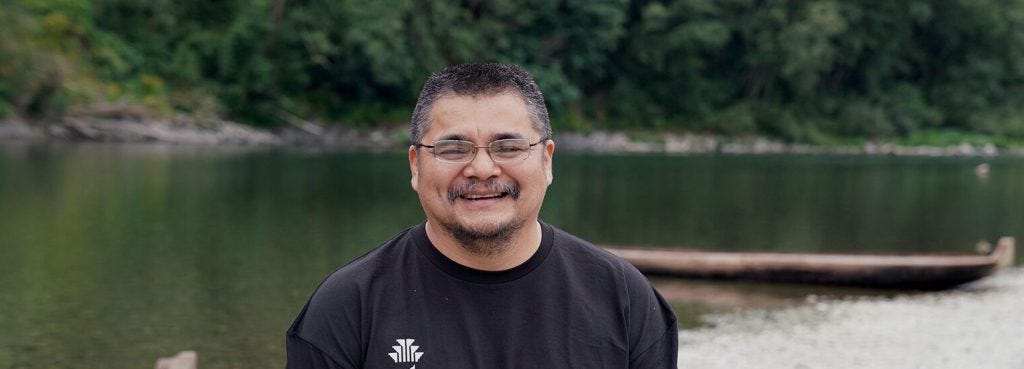
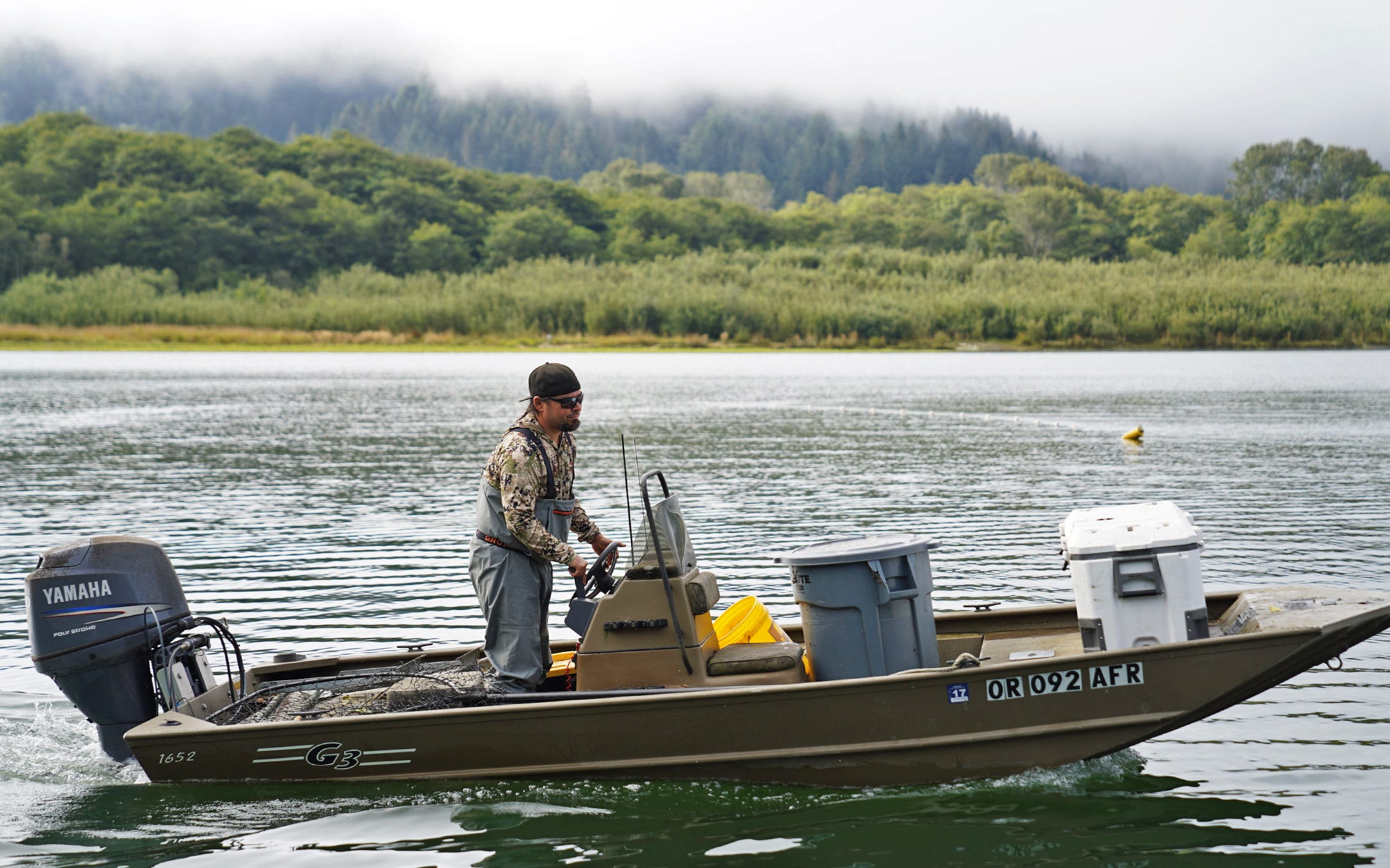
KLAMATH, California — The Pacific Ocean fog hung densely over the narrow mouth of the Klamath River in this coastal rainforest in northern California. Redwood, Douglas fir and alder disappeared into the mist. Seals bobbed nearby, hungry and waiting. An osprey swooped overhead, breakfast clenched in its claws.
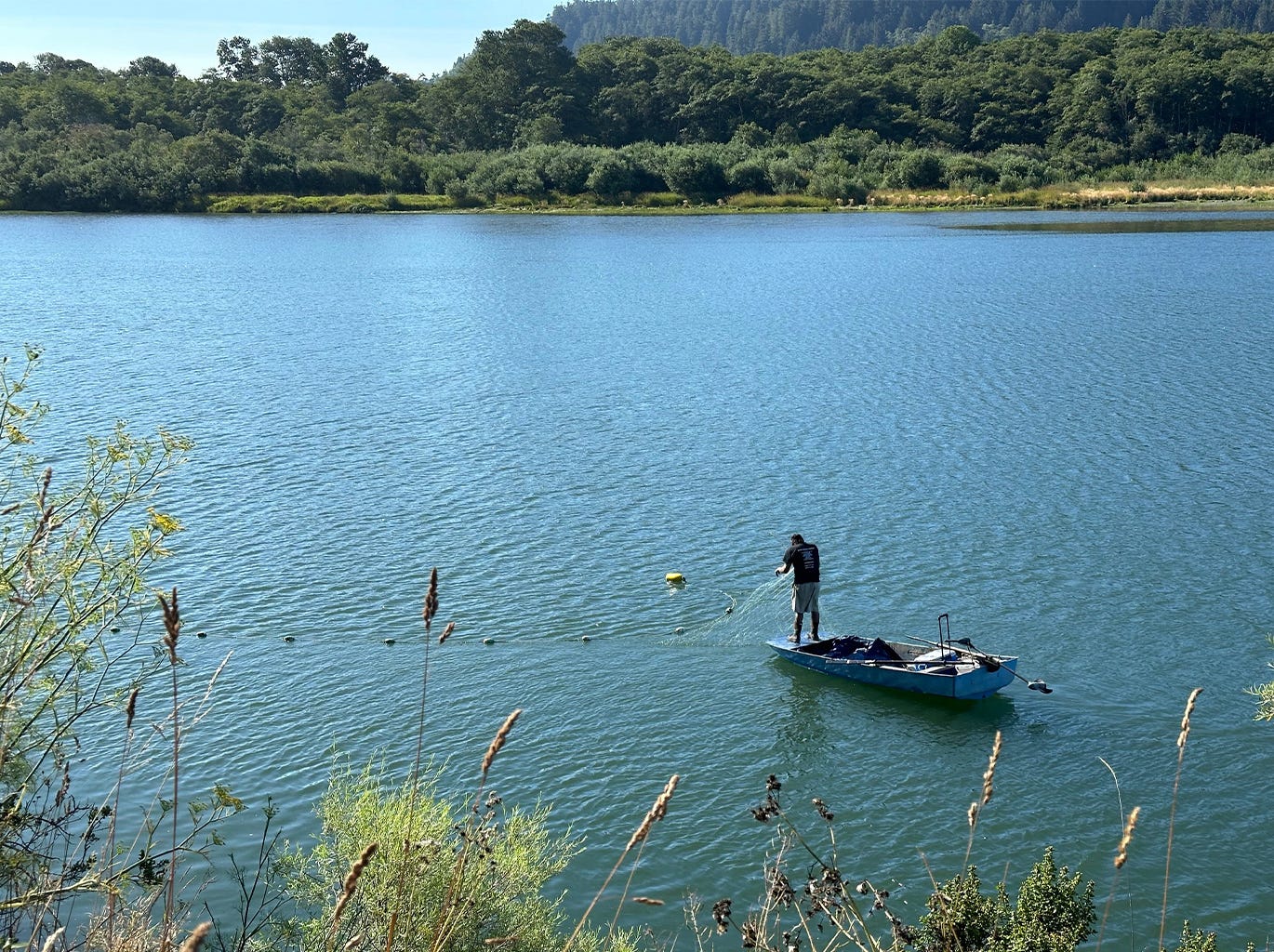
It was late July, 2024. The salmon run wouldn’t start for several months. But a few chinook salmon arrived early, some poached by birds and mammals, some caught in nets by Yurok fishing from their johnboats.
Key Points:
Four dams are now down on the Upper Klamath River in northern California in the largest river restoration project in U.S. history. But a rarely mentioned cold-water creek is essential to restoring health to what was once the third-largest salmon run on the West Coast of North America.
Blue Creek is located just 25 km (16 mi) from the mouth of the Lower Klamath at the Pacific Ocean. Critically, it’s the first cold-water refuge for migrating salmon that enables the fish to cool down, survive, and move farther upriver to spawn. The dams and logging have damaged this important watershed for decades.
The Yurok, California’s largest Indigenous tribe, lost ownership of Blue Creek to westward U.S. expansion in the late 1800s. In 2002, a timber company, negotiating with the Yurok, agreed to sell back the 19,000-hectare (47,100-acre) watershed to the tribe.
It took Western Rivers Conservancy, an Oregon-based NGO, nearly two decades to raise the $60 million needed to buy the watershed. In a historic transition, Blue Creek returns this spring to the Yurok for conservation in its entirety. The tribe considers the watershed a sacred place.
Pergish Carlson, a river guide and Yurok — a member of California’s largest Indigenous tribe — captained a modern motorboat on that morning. We were there to try and get a glimpse of the future, to witness a crucial ecological element connected to the largest river restoration project in U.S. history: the return of nearby Blue Creek and its vast watershed to the Yurok Nation.
But Carlson couldn’t help but look to the past; it helped him savor the renewal that lay upstream, he told Mongabay.
“Not that many years ago,” he said, “the Indian people, my people, could only fish here at night, from 7 p.m. to 7 a.m. We were run off by the government if we tried to fish earlier. This was always our river, our salmon. But the daylight hours were reserved for sport fishermen.”
That seems a small indignation compared to what happened to the Yurok, and all tribes from coast to coast, with the 1887 passage of the Dawes Act during the administration of President Grover Cleveland. The act gave the U.S. government, eager to accommodate western migration, the legal authority to strip tribes of their own land and waterways, and, by extension, their culture and identity, their hearts and their spirit.
A day prior, as we sat with Joseph James, chair of the 6,000-member Yurok Nation, he spoke of the past and future.
“We as Indigenous people have suffered generations of trauma,” he told Mongabay. “I can look backwards, but it’s not going to do no good. Things are changing and we’re telling our story. We are acknowledging our partnerships and celebrating things we’ve made happen, things that maybe people thought would never happen.”
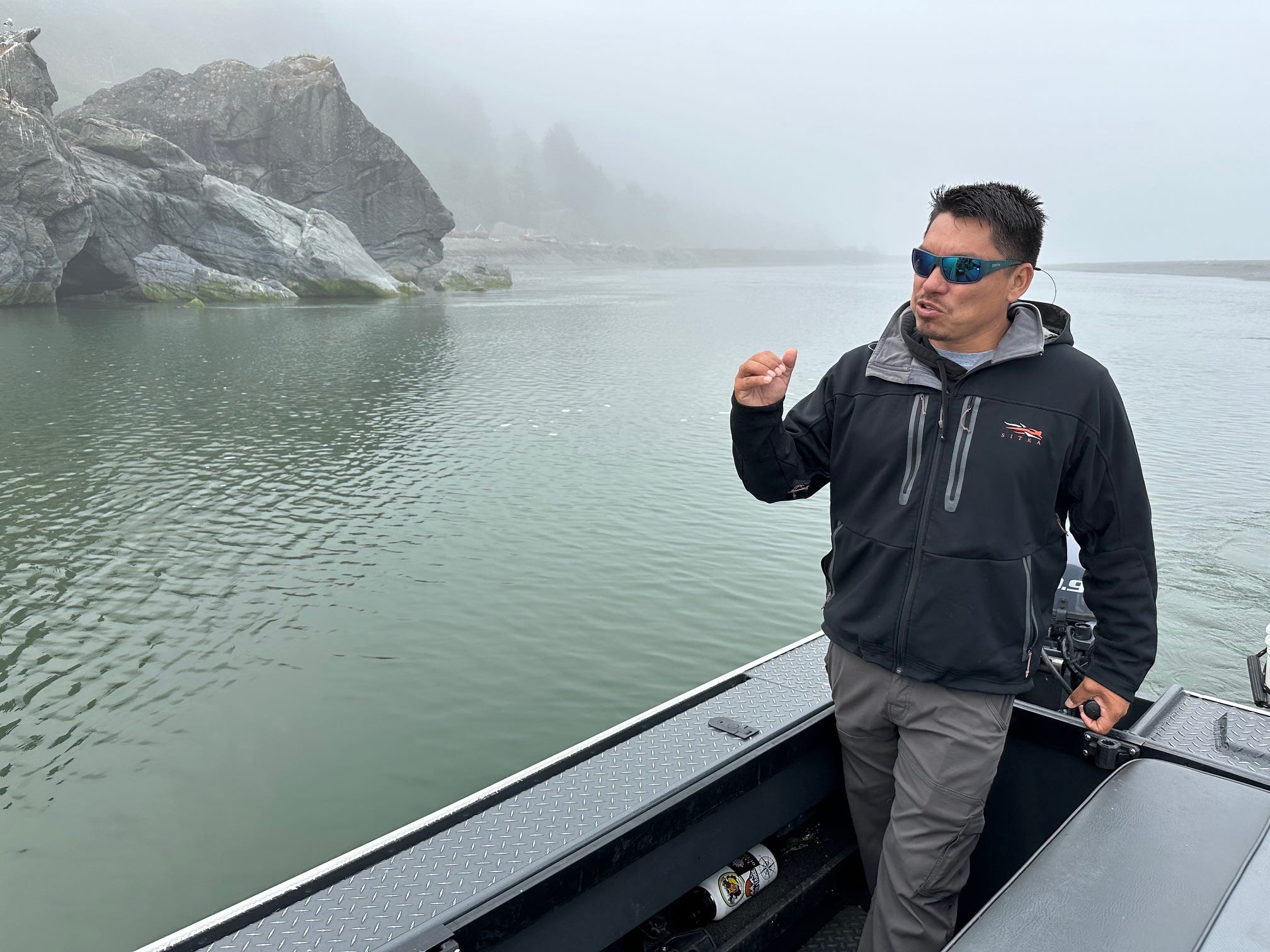
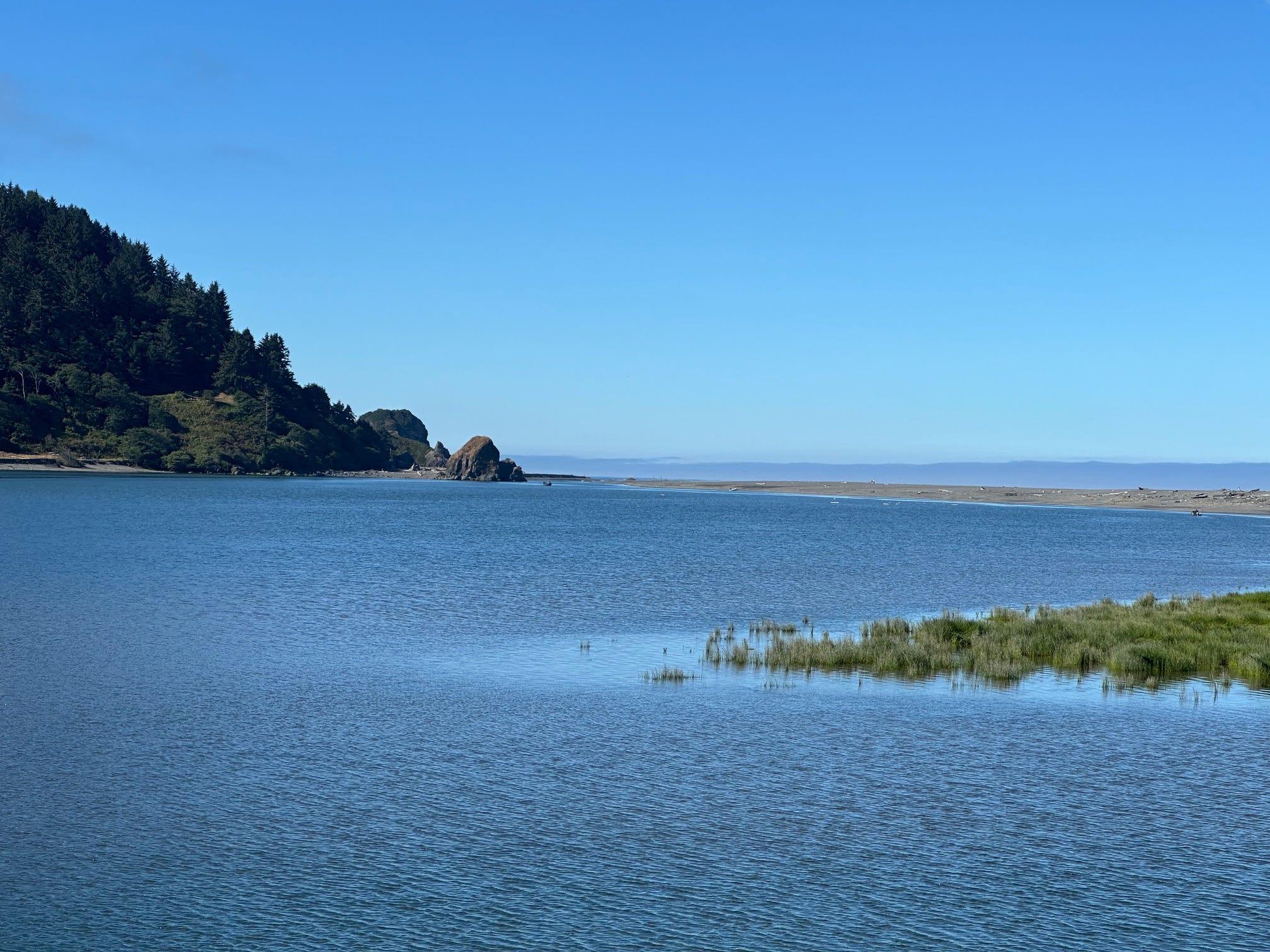
Back at the mouth of the Klamath near the ocean, Carlson turned his boat upstream. We were accompanied by members of the Portland, Oregon-based Western Rivers Conservancy, the Yurok’s most important partner in this rich but diminished ecosystem. We were heading just 25 kilometers (16 miles) to an ecologically vital location: the cold-water mouth of Blue Creek and its 19,000-hectare (47,100-acre) watershed. In recent years, more than 12,950 hectares (32,000 acres) had already been returned to the Yurok.
Now in early June, in what stands as a remarkable success story for the environment, for what was once the third-largest salmon run on the West Coast and for the Yurok tribe itself, the last 6,000-hectare (15,000-acre) section of the watershed returns to its rightful heirs who occupied it for millennia before the Dawes Act. It is the largest land-back conservation deal in California history, according to Western Rivers.
And all it took was two decades of relentless work, pioneering funding tools, and $60 million paid to a timber company that first offered to sell the land back to the tribe in 2002.
A generation later, the deal is finally closing.
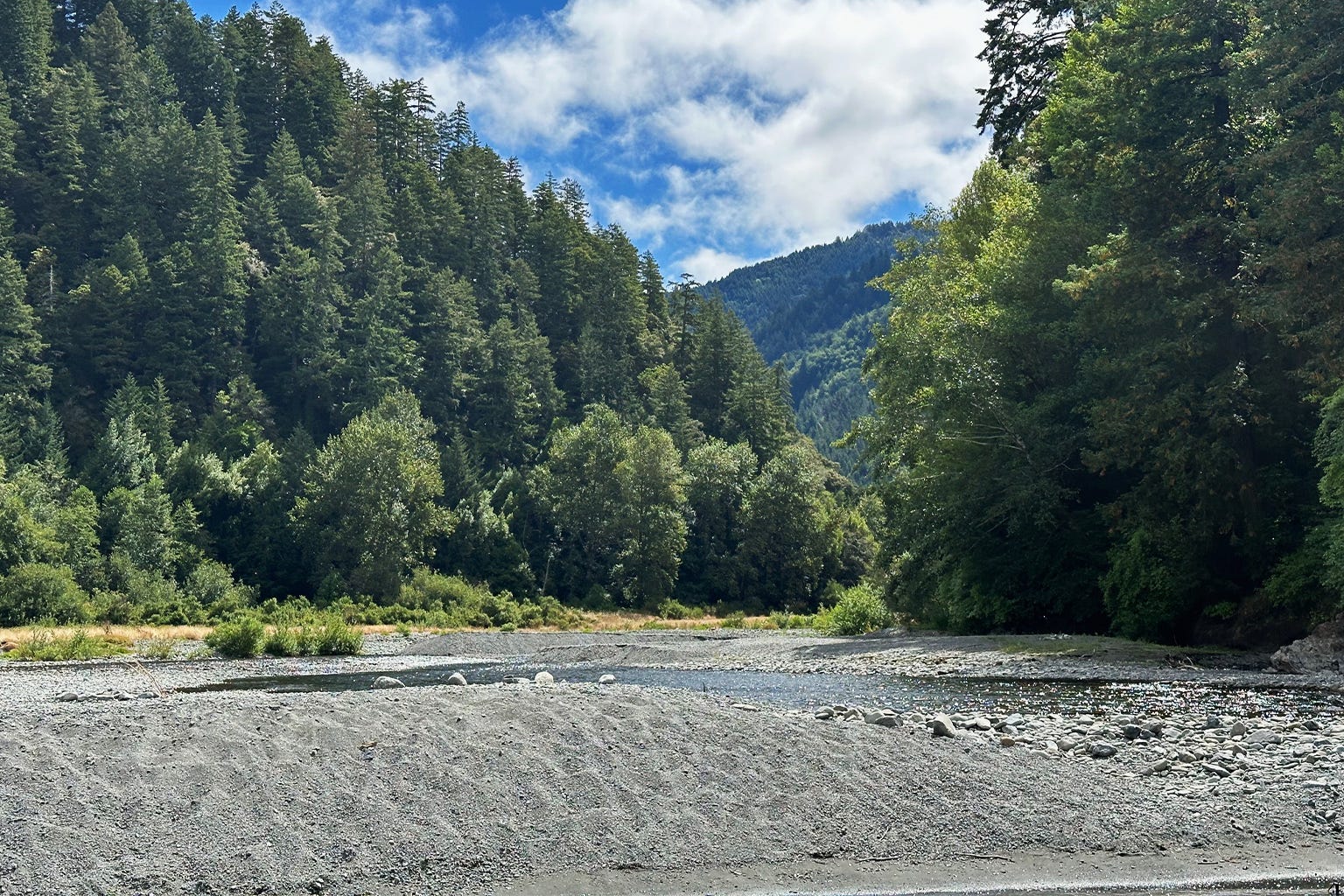
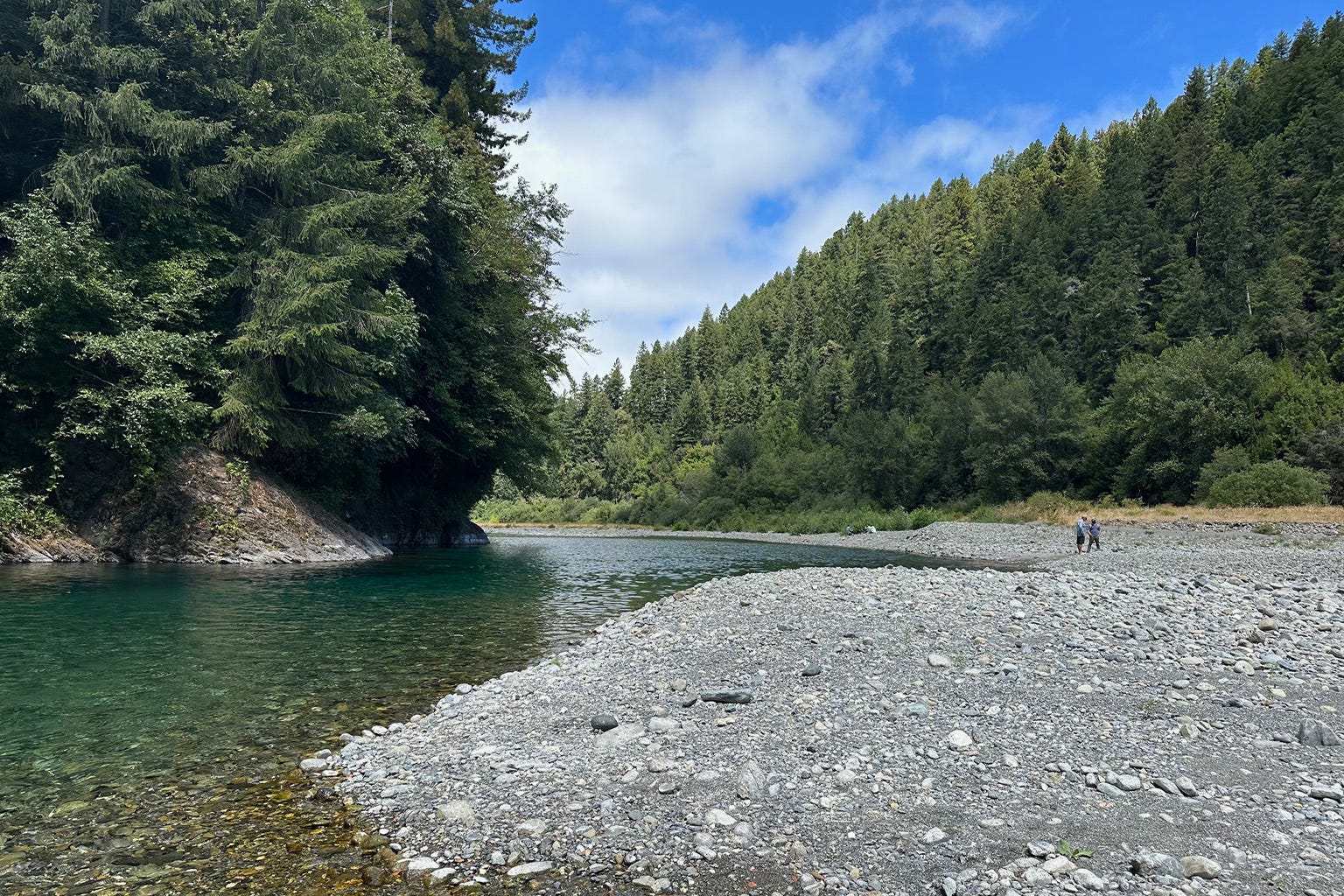
Arriving at Blue Creek, its frigid waters crystal clear, Carlson said: “This creek right here, this is the lifeline of the whole river — for the salmon, for water quality, and spiritually, for the Yurok people. This is a sacred spot.”
Blue Creek: ‘The biggest step’
Barry McCovey has been director of the Yurok’s fisheries department for a quarter-century. He’s intimately familiar with the Lower Klamath and its many creeks and tributaries (the entire river length starting in the Cascades in Oregon runs 423 km, or 263 mi). Since fall 2024, most attention has focused on the Upper Klamath and the historic removal of four dams that has enabled the river’s free flow for the first time in more than 100 years.
McCovey has a broad view of the ecosystem. He knows how crucial dam removal is to restoring health to the Lower Klamath, “but it’s just one step,” he told Mongabay. “There are many steps in this journey to get to the ultimate goal of balance and restoration of the river system.”
As for Blue Creek, just 37 km (23 mi) long and, at its mouth, barely a few feet deep, McCovey said, the reclamation and restoration of the creek “is a massive step in the right direction, maybe the biggest step of all.”
The reason is simple. Salmon — chinook, steelhead, coho — are cold-water fish spending much of their adult lives in the salty Pacific. When they swim up the fresh-water Klamath to spawn in spring and fall, their body temperatures climb perilously by almost 13° Celsius (23° Fahrenheit) in just a few miles in warmer river water.
This would be fatal if not for the pool at the mouth of Blue Creek, the first cold-water refuge that’s a stopover for every salmon heading farther upstream. When juvenile salmon swim downstream to the ocean in June and July, Blue Creek is their last temperature-adjusting refuge before entering the ocean.
In essence, no Blue Creek means no salmon — a reality that would impact the very survival of the Yurok themselves.
“Around 40,000 fish will return to the Klamath Basin this year,” McCovey predicted; he snorkels to help do fish counts himself. “The average was around 120,000 fish in 1978. But actually, 120,000 was a number really depressed by the dams, the timber industry, overfishing, water diversion for agriculture and now climate change. That 120,000 was a fraction of what fish runs were historically.”
Blue Creek suffered along with this. Logging roads and timbering amid the 19,000-hectare watershed dumped silt into the creek, where it remains piled up near the mouth. Shade was reduced, creek flows sped up, and water levels dropped. The creek even warmed by more than 12°C (22°F). Salmon populations dropped as a result.
Richard Nelson, who heads the Yurok’s watershed restoration and roads department, told Mongabay an enormous amount of work is needed to “heal” the acreage above the creek wrought by decades of timbering. Such work includes selective tree thinning to reduce wildfire fuel, recontouring miles of logging roads and swales to mitigate runoff and strategically placing dead trees in the creek to slow the flow, recharge groundwater and create aquatic habitats.
In the coming generations, active Yurok land management intends to deepen the creek and restore the entire watershed to the biodiverse old-growth forest it once was. Endangered species such as the spotted owl (Strix occidentalis) and marbled murrelet (Brachyramphus marmoratus) may rebound along with the salmon.
“My grandchildren couldn’t retire out here [before] doing all the work that needs to be done,” Nelson said, looking years into the future. But he stressed that such labor is an opportunity, a privilege. “Back in the day, it was pie in the sky to think we’d ever get this land back. Now here we are, and the dams are … gone, too. It’s a phenomenal thing.”
The cost of saving a watershed
The opportunity was first broached in 2002.
Green Diamond Resource Company, a sixth-generation forest products firm once known as the Simpson Logging Company, enjoyed the flip side of the Dawes Act coin. A tragic land-stripping ordeal for Indigenous tribes near the river became a lucrative business opportunity for settlers in forest-rich northern California. Green Diamond still controls more than 121,400 wooded hectares (300,000 acres) in the region and along stretches of the Klamath.
Galen Schuler, the company’s former general counsel, tells Mongabay the legacy of the Dawes Act was not forgotten in deciding to make the Blue Creek watershed available for sale.
“Here we are in the 21st century, a family-owned company that acquired this land in the post-World War II era from a bunch of different companies,” said Schuler, who retired in April. “A lot of it is inside the Yurok reservation. A huge, huge bunch of it. And here you have the largest tribe in California, and they hardly own any of their reservation at all. We knew they had ambitions for that, so we started talking.”
It quickly became clear that Blue Creek was a priority for the Yurok, for the ecological health of the salmon and the spiritual health of the tribe. Talks progressed, haltingly.
“You know, it’s difficult to be in tribal leadership and do a deal with a timber company,” Schuler said. “Everyone is wondering if the timber company is taking advantage. There’s a trust thing. We were fortunate to meet with really good Yurok leaders who wanted this deal, but they saw the benefit of a conservation group getting involved.”
It wasn’t just optics. Green Diamond wanted fair-market value for the 19,000-hectare watershed: $60 million. The Yurok never could have raised that enormous sum on their own. Starting in 2006, Western Rivers Conservancy took on the fundraising challenge. As a sign of trust, Green Diamond stopped logging in the watershed.
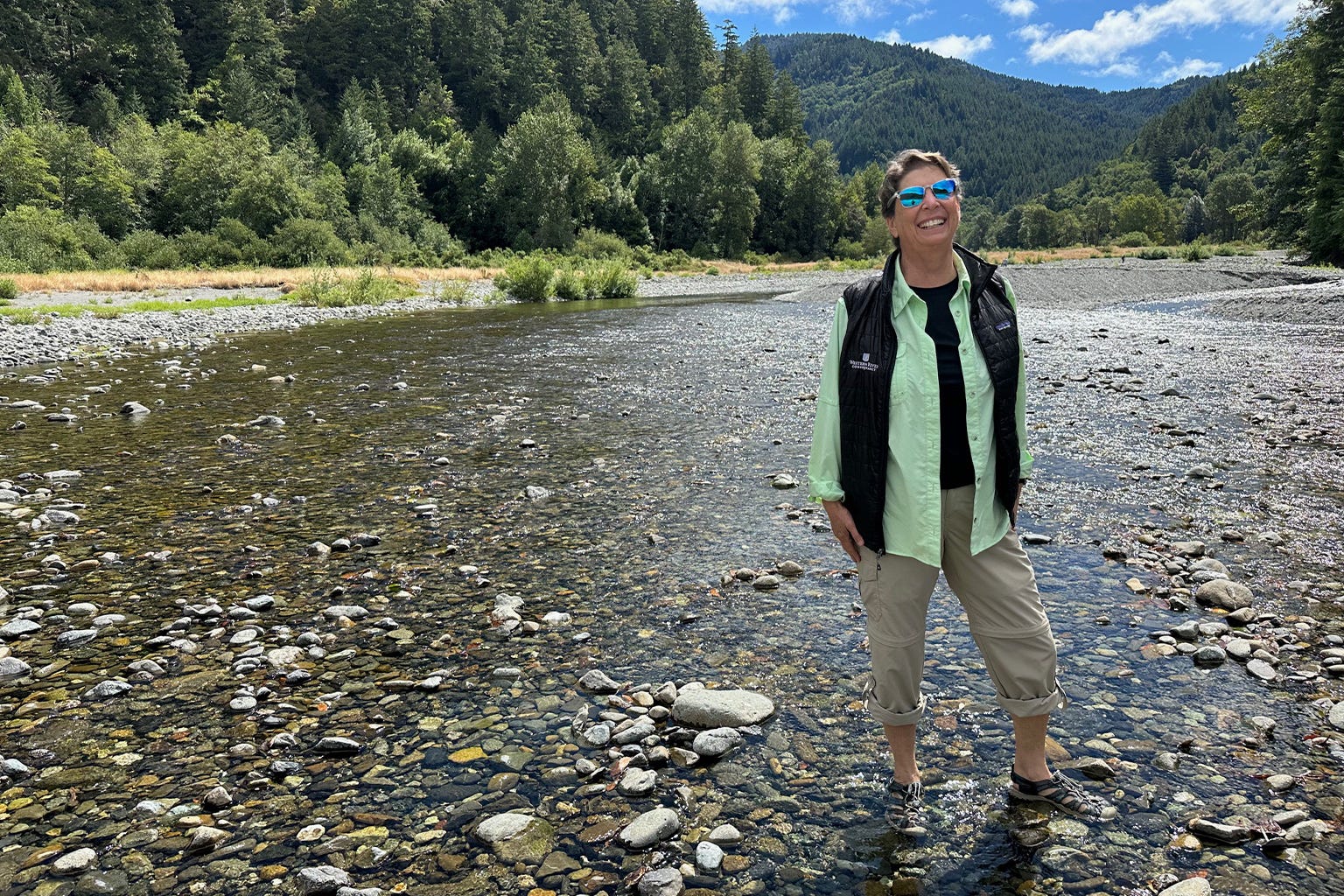
Sue Doroff co-founded Western Rivers in 1988 and retired as president in mid-2024. For her last 18 years with the conservation group, raising the funds to secure Blue Creek was her primary focus. It was complicated. It was long and difficult. And in late July, 2024, standing with her feet in the creek, she said the complex, innovative efforts were paying off.
“Sometimes to save a creek, you have to buy it,” she told Mongabay. “We are in the business of forever; that’s how we feel about the Yurok taking over as stewards of this vital creek and watershed.”
A novel, complicated deal
In interviews with Doroff, she made clear that the range of financing tools, including California carbon credits as well as federal loans and foundation grants rarely used in conservation projects, made for a complex challenge.
“When we first took on this project, we were all in,” Doroff said, “but we saw no clear way to raise that much money. We had to be creative. In time, we figured out how to get it done.”
Travois, a Kansas City, Missouri-based company that helps fund economic development on Indigenous lands in the U.S., originally helped Western Rivers access $3.85 million in new markets tax credits, a federal program. Such credits are typically used to fund real estate projects in low-income communities. At the time, using them for conservation was unusual. Western Rivers was later able to use those tax credits to leverage millions more from other financing partners across the country.
The U.S. Environmental Protection Agency has a revolving loan fund to help tribes reduce pollution impacts. It’s not usually used for conservation. But Doroff worked to qualify Blue Creek for $18.75 million, then lined up funding sources to repay the loan. Millions in loans and grants also came from California’s carbon credits program.
“It was the first time we ever did a loan where we promised to repay the loan with proceeds from carbon credits estimated from the watershed,” Doroff said.
As a result, Western Rivers paid Green Diamond in full in 2018. Loan guarantees required the nonprofit to hold most of the land for several years to demonstrate to lenders that it would be conserved. The last 6,000 hectares of the watershed are going back to the Yurok this spring.
In the end, all that money bought the Yurok the entire Blue Creek watershed, most of it divided between a salmon sanctuary and a community forest.
‘Buying back our own land’
Joseph James, the Yurok chair, paused when asked about the total cost, choosing his words diplomatically.
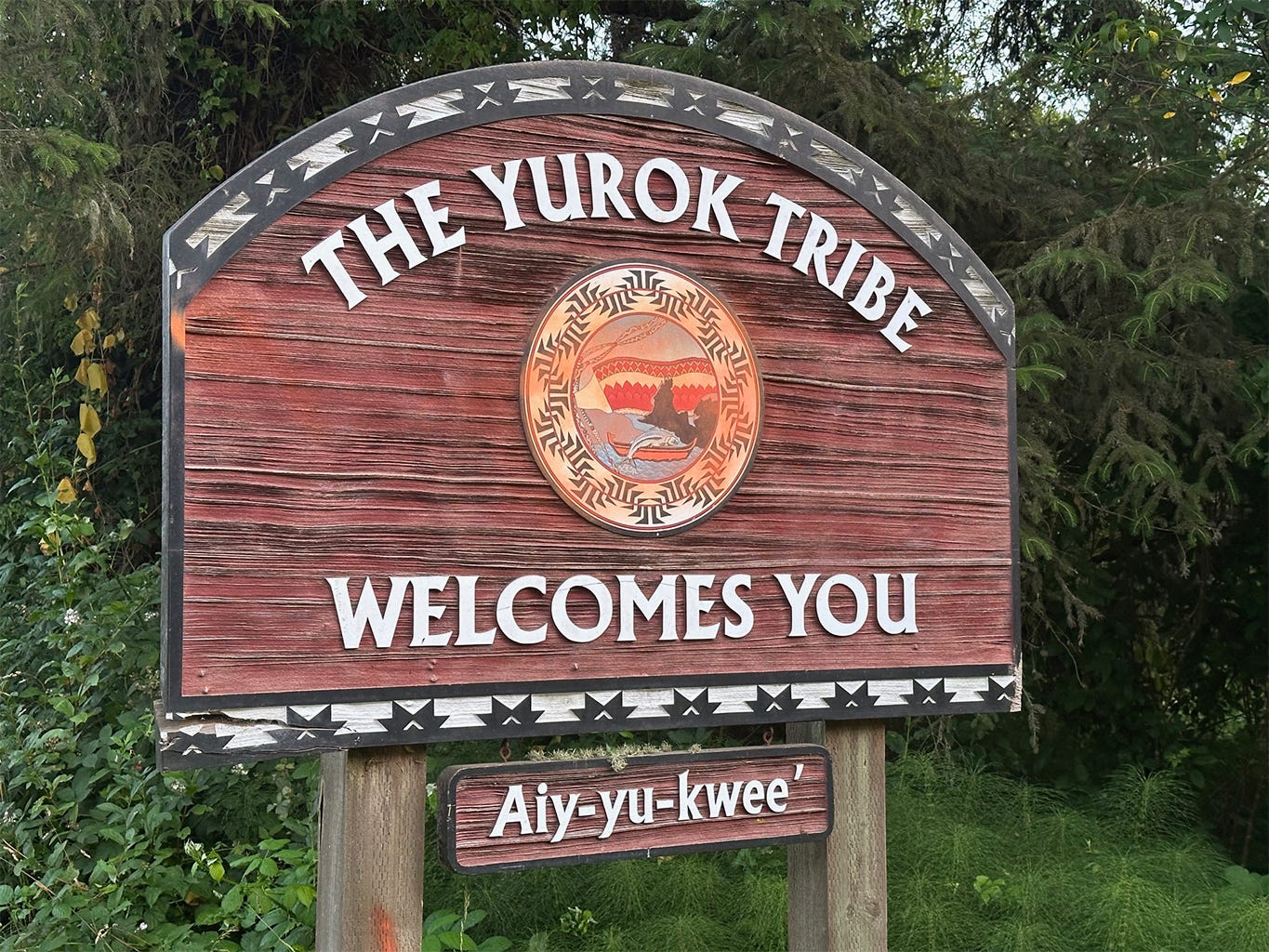
“You have to smile a little bit when you realise you’re buying back your own land, right?” he said. “Yes, it’s a hefty price tag, but it’s also priceless.”
James added that “there are not enough words” to describe the importance of Blue Creek to his people. The salmon are such a big part of it. But reclamation transcends nature.
“Blue Creek is also cultural for us,” he said. “It’s a place of higher prayer that we go to. It’s important to our members from a spiritual standpoint, from a wellness standpoint, and even when our members leave this earth. We use the area via boats to transport them.”
When tribal elders are taken to the ridgetops of the watershed and told “everything you see is yours again,” they shake their heads in disbelief, their eyes welling up. Not long ago, they would’ve been arrested for trespassing. Now their tears tell a different story.
“There were times over the past 20 years when we weren’t sure this would happen,” James said. “But we never gave up hope. We took a stance and said, ‘We love our river. We love our fish. We love our natural resources. We love our culture. And we’re not shy about showing it.’ That’s what Blue Creek means to us. That’s who we are.”
This story has been reproduced from Mongabay News under the Creative Commons license.
Story by Justin Catanoso, a professor of journalism at Wake Forest University in the United States.
Read the original article here >